
Braces vs clear aligners: which is right for straightening your teeth?
Metal braces or invisible aligners? An honest comparison of how they work, comfort, appearance, discipline needed and which cases each suits best.
Read articleDental care
Straightening teeth and correcting the bite.
Orthodontic treatment for crowded, gapped or misaligned teeth and bite problems (malocclusion) — with traditional braces or clear aligners, depending on what suits you.
Orthodontic treatment moves teeth into better positions using gentle, steady pressure over time. It corrects crowding, gaps and bite problems — known as malocclusion — such as overbite, underbite and crossbite. Straighter teeth are easier to clean and wear more evenly, as well as looking better.
Traditional braces use brackets bonded to the teeth and a wire that is adjusted at regular visits. Clear aligners are a series of removable, nearly invisible trays, each moving the teeth a little further; they need to be worn for most of the day to work. Which option suits you depends on the movements your teeth need and how you live.
Treatment time depends on how much correction is needed, and is often between several months and two years. Afterwards, a retainer keeps teeth from drifting back. There is no upper age limit — adults can straighten their teeth too, as long as the gums are healthy.

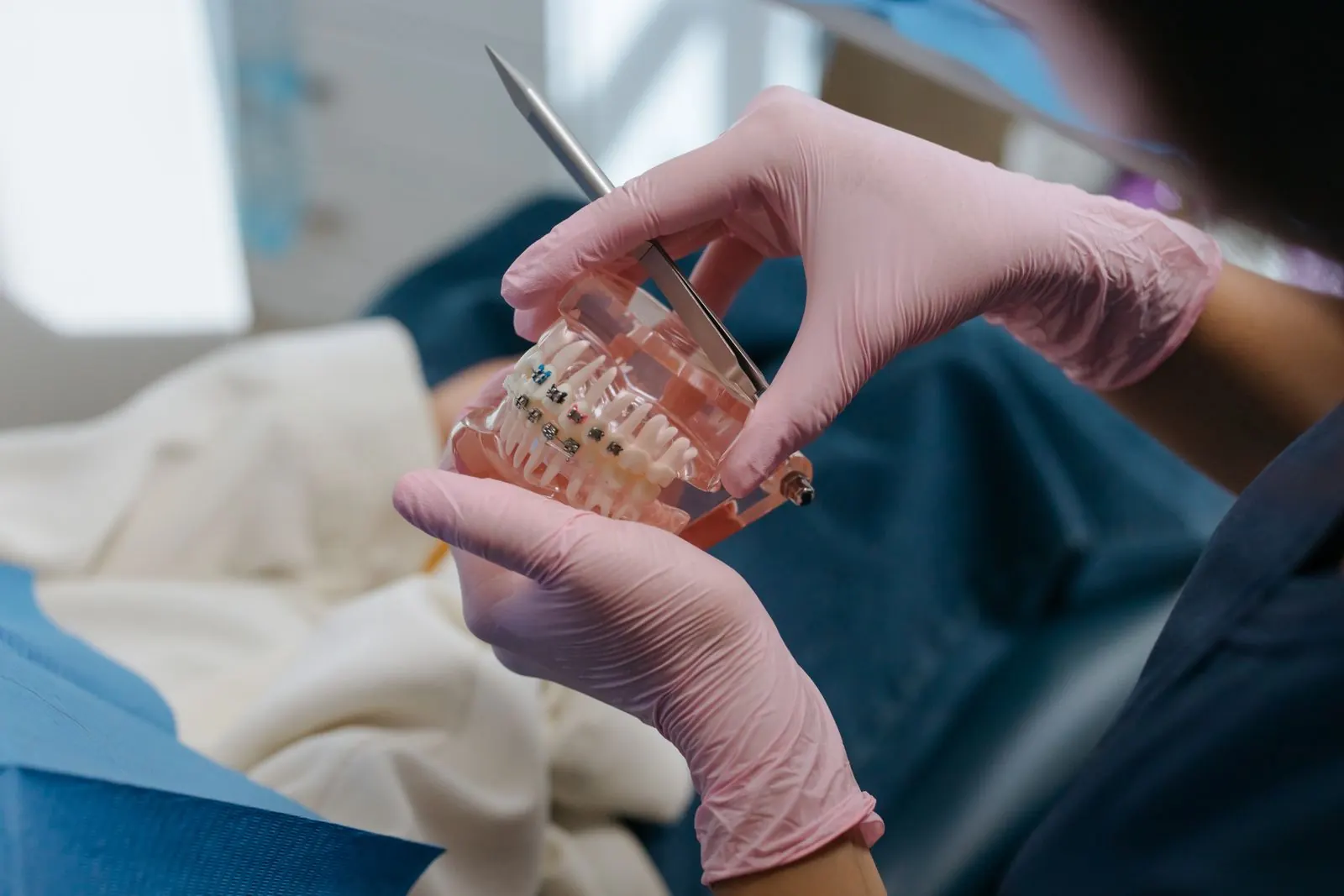
Representative photo.
Not sure if this is the right treatment? That’s what the consultation is for.
Dr. Jahanvi listens to your concern and examines you before anything is decided.
Options, number of sittings and what to expect are explained, so you can choose with full information.
Done at the clinic in Jhotwara, with your comfort kept in mind throughout.
Aftercare advice and review visits, so results are checked and maintained.
With Dr. Jahanvi Tyagi, dental surgeon & clinical cosmetologist · Open every day, 10:30 AM – 8:00 PM